
Sunderban National Park & Tiger Reserve India | Tourism Guide
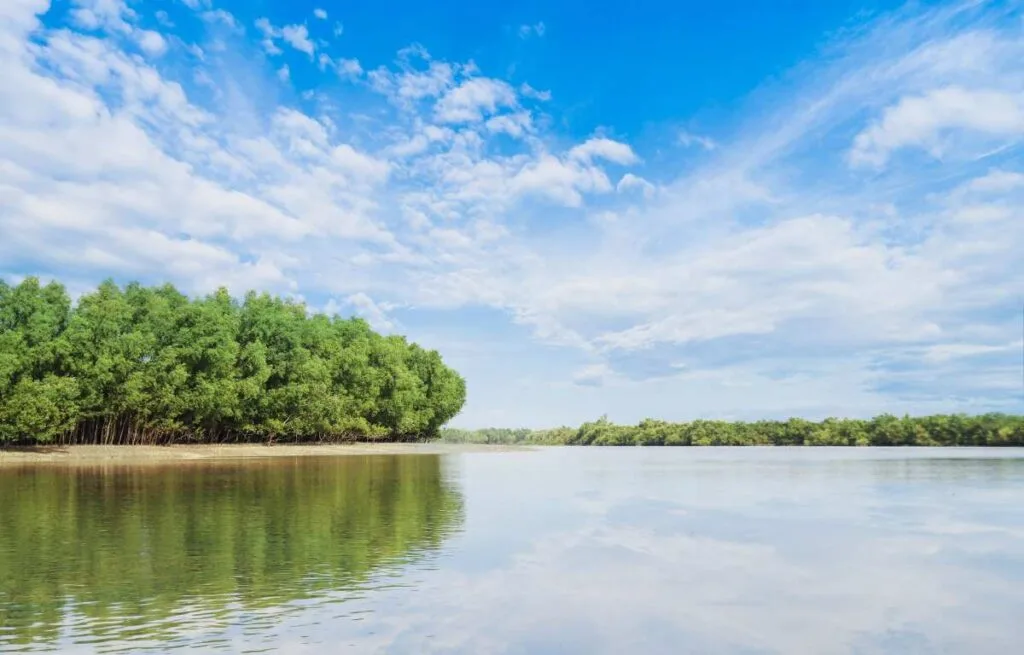
The Sundarbans National Park is one of South Asia’s greatest natural treasures and a UNESCO World Heritage Site. Located in southern West Bengal, India, it forms part of the world’s largest mangrove forest, covering nearly 10,000 square kilometres across India and Bangladesh. The delta is created by the mighty Ganga, Brahmaputra, and Meghna Rivers, making it one of the most unique ecosystems on Earth.
The Sundarbans is globally famous as the home of the magnificent Royal Bengal Tiger. Besides its rich wildlife, the region attracts nature lovers, birdwatchers, photographers, and adventure seekers throughout the year.
History Of Sundarbans National Park
The history of the Sundarbans dates back to 200–300 AD. During the Mughal era, local communities established settlements in the forests. However, Portuguese pirates and salt smugglers later abandoned many of these villages. Today, visitors can still explore the historical ruins of Netidhopani.
The British declared much of the forest a Reserved Forest in 1875. Later, the area became a Wildlife Sanctuary in 1977, a Tiger Reserve under Project Tiger in 1973, and finally a National Park on 4 May 1984.
Geography Of Sundarbans
The Sundarbans forms the world’s largest river delta. Thousands of rivers, tidal creeks, mudflats, islands, and mangrove forests create this extraordinary landscape.
The park covers approximately 1,330 square kilometres, while the entire Sundarbans ecosystem extends much farther across India and Bangladesh.
Flora of Sundarbans
The Sundarbans supports over 60 species of mangrove plants that thrive in salty water. The famous Sundari tree gives the forest its name.
Other important plants include:
- Sundari
- Golpata
- Genwa
- Dhundul
- Hental
- Champa
These mangroves protect the coastline and provide shelter for countless marine species.
Wildlife in Sundarbans
The Sundarbans is one of India’s finest wildlife destinations. Although the Royal Bengal Tiger is the biggest attraction, visitors can also spot many fascinating animals.
Popular wildlife includes:
- Royal Bengal Tiger
- Spotted Deer (Chital)
- Fishing Cat
- Leopard Cat
- Wild Boar
- Rhesus Macaque
- Flying Fox
- Indian Grey Mongoose
- Pangolin
- Jungle Cat
The park is also home to:
- Saltwater Crocodile
- Water Monitor Lizard
- King Cobra
- Rock Python
- Batagur Baska Turtle (Critically Endangered)
Moreover, hundreds of resident and migratory birds make Sundarbans a paradise for birdwatchers.
Rivers and Islands
The Sundarbans is formed by the Ganga, Brahmaputra, and Meghna Rivers. These rivers create thousands of waterways that visitors explore by boat.
Popular islands include:
- Netidhopani
- Kalash Island
- Henry Island
Village Life in Sundarbans
Several villages surround the national park, including:
- Pakhiralay
- Dayapur
- Bali
- Sajnekhali
Village walks allow visitors to experience local culture, traditional fishing, honey collection, and rural Bengali life.
Best Time to Visit Sundarbans
The ideal time to visit is November to March. During these months, the weather remains cool and pleasant, making wildlife safaris more enjoyable.
Although visitors can travel between April and July, temperatures often exceed 40°C. On the other hand, the monsoon season brings heavy rainfall and high tides, making travel difficult.
Sundarbans Safari
Unlike most national parks, the Sundarbans offers only boat safaris. Visitors explore the forest through rivers and narrow creeks while enjoying spectacular views of wildlife.
Safari Timings
- Morning: 8:30 AM
- Evening: 4:00 PM
- Boat entry after 6:30 PM is not permitted.
How to Reach Sundarbans
By Air
The nearest airport is Netaji Subhas Chandra Bose International Airport, Kolkata. From there, drive to Godkhali Jetty, the main gateway to Sundarbans.
By Train
Take a local train from Sealdah Railway Station to Canning. Next, travel by shared vehicle to Godkhali Jetty, where boats depart for Sundarbans.
By Road
Drive from Kolkata to Godkhali, a journey of around 3.5 hours. From the jetty, continue by boat to your resort or safari point.
By Waterway
Boat travel begins from Godkhali Jetty. From there, motorboats transport visitors through the rivers and mangrove forests to different parts of the Sundarbans.
Book Your Jugle Safari Online
⭐⭐⭐⭐⭐ 4.9 / 5 Based On 245 Verified Customer Ratings